

Despite the rapid growth of American cannabis growing, imports of hemp products in the United States are not decreasing.
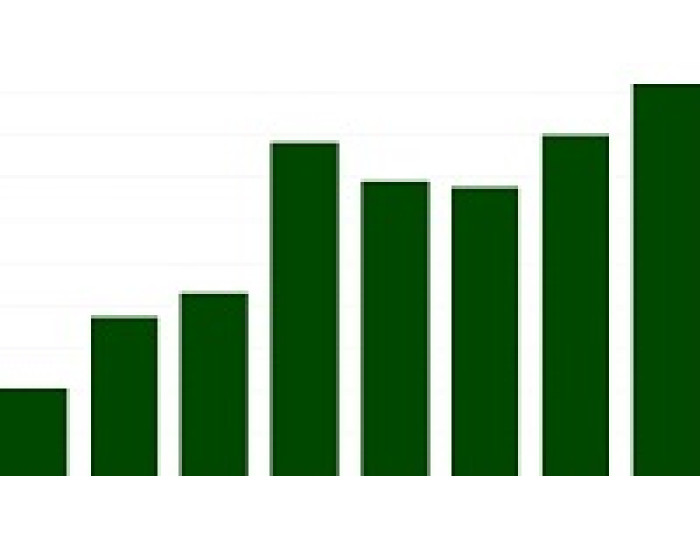
If Canada (controls about 85% of the country's imports of products that do not contain therapeutically active elements) and China (created production chains that allow using almost the entire potential of the plant - grain, fibrous part, root, leaves and inflorescences) are traditional suppliers of hemp products in The United States, Romania, Dominican Republic, Poland, Lithuania, Germany and Bolivia are the countries whose companies are actively working to expand their presence in the most attractive market on the planet.
One of the main arguments, which was widely used in the course of lobbying for changes to the US legislation, was the need to reduce the import of hemp products into the country and replace it with goods from domestic producers. However, despite the rapid growth of various sectors of the US cannabis growing, observed in a number of modern sectors of the industry, the dynamics of imports to the country of hemp raw materials, as well as the final products from it, are still not decreasing. How this kind of experience can be of interest to Ukrainian cannabis growers, we will briefly try to analyze in this material.

Despite the entry into force of amendments to the law on agriculture in 2014, according to which the legal cultivation of test crops of technical hemp was allowed, the import of hemp products increased from $ 42.9 million to $ 78.1 million - by 82% ... Despite the amendments to the law "On farms" in 2018, according to which the cultivation of the plant was allowed at the federal level, in 2019 the import of hemp raw materials, as well as the goods produced from it, continued to grow.
It should be noted that imports of raw hemp and products made from it in the first 10 months of 2020, which are not related to CBD goods, also increased by 10% compared to the same period in 2019 (the indicated data of $ 87.8 million demonstrates the import of hemp raw materials and products not for the entire period of 2020). The cost of inbound hemp seed shipments in October 2020 jumped nearly a quarter compared to 2019, while the value of raw hemp imports increased by more than a third. The 10-month values for these two categories exceeded the annual values for 2019 and offset the sharp drop in hemp oil and meal imports in 2020.
Canada remained the main source of cannabis imports in 2020, according to the US International Trade Commission, supplying over 85% of non-CBD incoming products in the first 10 months of 2020. China, Romania, the Dominican Republic and Poland round out the top five supplying the US with fiber, textiles and hemp seed products during this period. Lithuania, Germany and Bolivia were among the top 10 hemp exporting countries in the United States in 2020.
Commentary of the specialists of the Association "Ukrainian technical hemp"
The currently insufficient development of capacities for the primary and deep processing of hemp raw materials in the United States does not yet make it possible in a number of sectors of modern hemp growing to compete on equal terms with American producers with imported not only final goods, but also raw materials coming into the country from abroad. If Canada (controls about 85% of imports into the country of products that do not contain therapeutically active elements) and China (created production chains that allow using almost the entire potential of the plant - grain, fibrous part, root, leaves and inflorescences) are traditional suppliers of hemp products in The United States, Romania, Dominican Republic, Poland, Lithuania, Germany and Bolivia are the countries whose companies are actively working to expand their presence in the most attractive market on the planet.
The only barrier that does not allow Ukrainian agricultural producers and processors to adequately compete for their share in the American market are artificial administrative barriers, which are still present in the current regulatory framework of Ukraine and prevent the use of all parts of the plant for industrial purposes. It is the imperfection of the current legislation, often used in their own interests by individual law enforcement officers, that currently makes Ukrainian products uncompetitive in the global hemp market. What will need to be done in the near future to create conditions in our country, according to which absolutely all parts of the plant can be used for industrial purposes by the end of this year, will be clearly demonstrated within the framework of the round table “ Problems and prospects of using therapeutically active elements of hemp in as a basis for nutraceuticals, medicinal cosmetics, animal feed or other products with the healing properties of a plant ", which will be held for the students of the 6th stream of training at the" Hemp University " .