

One of the drivers of economic recovery, the Turkish government considers the "launch" of modern hemp
Turkey has excluded products based on cannabis from its medical system since 1940. For several decades, the country had a powerful industry, the main raw material base of which was the various components of cannabisa, but under pressure from the international public. By the beginning of the 21st century, the well-developed hemp industry of the country has come to a complete degradation.
The pages of the specialized electronic publication of Ukrainian cannabis have already described the initiatives of individual EU governments to reanimate national economies, using the economic, biological, therapeutic potential of cannabis. In particular, In Greece, the question is raised about the replenishment of the budget with cannabis . The Turkish government plans to significantly expand the hemp industry etc
A few days ago, Turkish President Recep Tayip Erdogan, during one of the official events at the presidential palace, made a rather remarkable speech, which rather succinctly characterizes the attitude of the head of state towards the revival of warriorism. In particular, he said “I remember how my mother knitted bags of hemp fibers, which we constantly used for various purchases. These are not disposable packages, this is an extremely necessary thing that we have been using for years. Even after this bag had to be thrown away, we didn’t worry that hemp rags had a negative effect on the ecological situation. Despite the huge number of advantages, we actually destroyed cannabis in our country because of the enemies that were disguised as friends. ” Further, the President of the Republic focused on the fact that Turkey was destined to resume the cultivation of cannabisa, as well as to stimulate the production of various products and goods made from hemp raw materials.
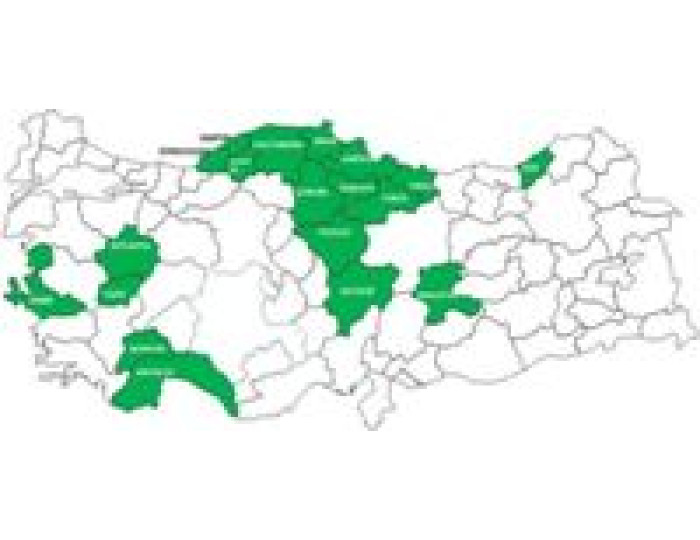
The next day, the Minister of Agriculture Bekir Pakdemirli revealed the details of what was planned by the country's president. According to him, the government has already authorized the cultivation of hemp in 19 out of 81 provinces, most of which are located in Central Anatolia, as well as in the eastern part of the Black Sea region. Taking into account the need of the Turkish market for hemp raw materials, as well as finished products created from it, the number of permits to enterprises in the field of hemp production will be significantly increased. Attention was drawn to the fact that in the media in the near future it is planned to publish information relating to the cultivation and processing of plants, as well as describing certain aspects related to the beneficial effects of cannabis cultivation on the land resources of the country.
Turkey’s dependence on imports of raw materials and products made from hemp is obvious. In particular, an employee of one of the agricultural universities of the country, Ondokuz Mayis (Ondokuz Mayıs), states that until 2017, the country imported an average of up to 100 thousand tons of cannabis per year, and its volumes increased annually. Only a jump in inflation was the reason that in 2018 hemp imports decreased.
According to the head of the Istanbul Chamber of Agriculture Engineers Ahmet Atalik (Ahmet Atalık), Turkey has considerable potential for growing industrial crops of cannabis. Mr. Atalik argues that “Hemp is a plant that has long been adapted to most of the climatic zones in the country and can be used in a huge number of modern economic sectors. This is one of the few crops that can be highly profitable to grow without irrigation in the Black Sea region, where a small amount of precipitation falls throughout the year, and in those areas of the country where the climate is high in humidity or suggests irrigated agriculture.
Commentary of the Association «Ukrainian Technical Hemp»
The US government in the mid 30s of the last century banned 37 drugs on the basis of hemp. Just a few years later, European countries followed the American example. In turn, Turkey has excluded hemp-based products from its medical system since 1940. For several decades, the country had a powerful industry, the main raw material base of which was the various components of cannabisa, but under pressure from the international public. By the beginning of the 21st century, the well-developed hemp industry of the country had come to a complete degradation. Only in 2016, Ankara issued a decree providing an opportunity to cultivate hemp to 19 provinces of the country. In spite of this, according to the Turkish Statistical Institute (Turkish Statistical Institute), the annual production of hemp, which in the 90s of the last century ranged from 3 to 6 thousand tons, reached in 2017 marks in 7 tone.