

An agroforestry experiment combining the cultivation of poplar and industrial hemp
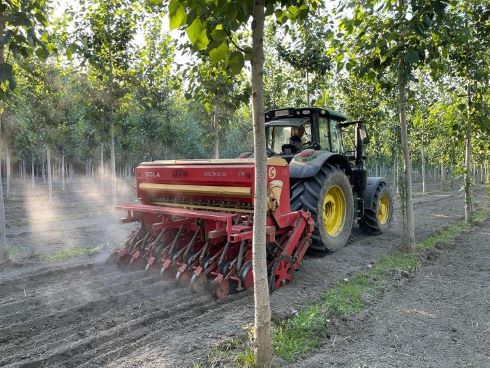
Intergrowing a crop such as industrial hemp with a plant that has a longer growth cycle, such as poplar (the cutting period is about ten years), will help foresters to obtain additional income in a more stable manner from agricultural/forest plants that are very resistant to pests and do not require special care or fertilizers .
European project “ Life Wood for Future ”, carried out with
the participation of specialists from the University of Granada, demonstrates
the possibility of planting industrial hemp on a plot of land where poplar is
grown on an industrial scale.
A group of hemp growers from the province of Granada, led
by the Confederation of Spanish Forestry Organizations ( Confederación de
Organizations de Selvicultores de España (COSE) has launched a pilot test of an
agroforestry system that, for the first time in Spain, combines poplar groves
with industrial hemp. The aim of this activity is not only to increase the
profitability of poplar plantations within the framework of the European project
“LIFE Wood for Future ” initiated by “ Madera para el Futuro ”, aimed at
revaluing poplar wood as a raw material for sustainable construction. One of
the main objectives of the project was the environmental component - soil
restoration and improvement of air quality in the region.
To this end, the organization “LIFE Madera para el Futuro ,
led by the University of Granada, with the participation of the Granada
Provincial Council and COSE, has financed the planting of industrial hemp on 10
hectares of poplar groves in the Altiplano region .
Hemp was planted among industrial poplar crops and will be
harvested in the fall to obtain the fibrous part of the plant. Hemp fibers and
hurds are planned to be used to produce building material (ecological bricks or
adobe) used for bioclimatic construction.
Patricia Gomez Agrela , COSE manager, explains that poplar and industrial hemp form a friendly environment that, on the one hand, allows them to benefit from their coexistence, and on the other, their joint cultivation increases the capacity of each of them individually to decontaminate and regenerate the soil, making it more fertile for future sowing campaigns.

Soil regeneration and CO2 capture
Although there are other agroforestry systems – such as the
intercropping of poplar and garlic or poplar and corn – industrial hemp is
particularly suitable because it is a plant that adapts to any type of soil.
The hemp plant tolerates very well the blanket irrigation with wastewater
typically used in poplar fields and is not harmed by the shade cast by poplars,
since it is the stems that grow, containing the fibre useful for industry, and
not the leaves or flowers of the plant. Moreover, the roots of the trees and
hemp create a symbiosis in which nutrients are exchanged.
Ms. Gomez notes that the project will generate greater
profits from the crops grown on the land while improving the soil and capturing
CO2 in one of the cities with the worst air quality in the entire country.
As for the economic component, the joint cultivation of an agricultural crop such as industrial hemp with a plant that has a longer growth cycle, such as poplar (the cutting period is about ten years), will help foresters to obtain additional income in a more stable mode from agricultural/forest plants that are very resistant to pests and do not require special care or fertilizers.

< Previous article Next article >