

Market prospects for “non-traditional” therapeutically active elements of cannabis
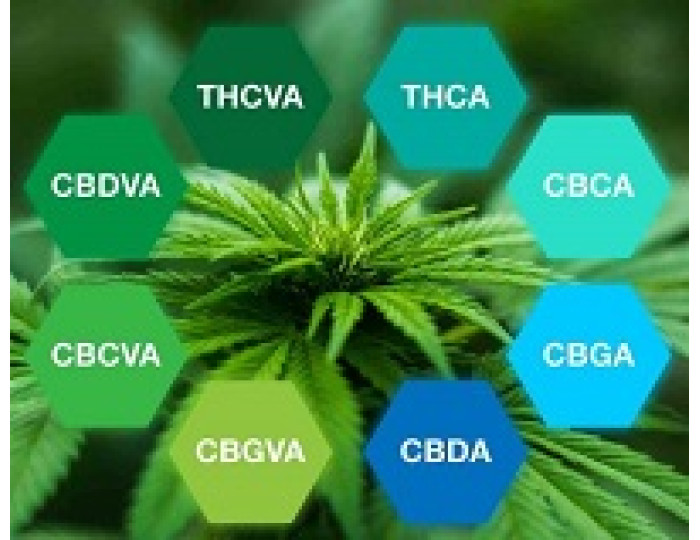
Several European companies entered the market at once with raw materials and products rich in cannabigerol, cannabichromen, as well as a number of other “unconventional” therapeutically active substances contained in hemp. Accordingly, research has intensified to study the therapeutic properties of not only individual therapeutically active elements of the plant, but also their interaction with each other.
The rapid growth of the market for products, the formulation of which includes "non-essential" drug-free cannabinoids, forces market specialists to closely monitor this area of modern cannabis farming. Taking into account the preparations for the specialized round table “Exponential growth of the market for non-traditional therapeutically active elements of cannabis”, the editors of the specialized electronic publication of national cannabis growers asked a number of questions on this topic to the representatives of the information and analytical platform “Hemp Consulting”. The text provided for publication by Hemp Consulting specialists is published without any corrections or cuts.
The hemp plant contains hundreds of rare compounds (found nowhere else in nature) that have tremendous therapeutic properties. The uniqueness of the plant itself lies in the fact that cannabinoids, terpenes, terpenoids, flavonoids, finols act on the mammalian body in a complex manner, enhancing the therapeutic effect of each other - the so-called “entourage effect”. A peculiarity of the situation on the market at the moment is that often modern science is not able to give a clear answer, which particular compound that makes up the plant works most effectively in the treatment of a particular disease. There are a number of theories that have already been tested in practice and form the basis for the creation of individual recipes for food products, cosmetic preparations, various kinds of additives (food, biologically active, dietary), including pharmacological agents that work effectively for the prevention / relief or treatment of a number of diseases. However, it must be borne in mind that the production of products that include tetrahydrocannabinol or cannabidiol was not a very difficult process due to the fact that there were already plant varieties in which the aforementioned therapeutically active substances were found in a significant amount. Accordingly, the extraction of the aforementioned cannabinoids, as well as a number of terpenes and flavonoids, did not imply any significant financial investments in the creation of specific production chains or the development of new varieties of the hemp plant or exclusive mechanisms of its extraction.
The situation on the market of therapeutically active substances began to change several years ago due to the fact that a huge amount of unclaimed hemp raw materials rich in THC or CBD appeared on local and regional markets (Canada, USA, Israel, etc.). Accordingly, a number of companies have turned their attention to other therapeutically active elements of the hemp plant with significant therapeutic potential. This kind of activity has already led to the fact that several European companies entered the market at once with raw materials and products rich in cannabigerol, cannabichromen, as well as a number of other “unconventional” therapeutically active substances contained in cannabis. Accordingly, research has intensified to study the therapeutic properties of not only individual therapeutically active elements of the plant, but also their interaction with each other.
At the initial stage of the development of this market, new tasks were set for breeders, processors, chemists, physicians, who had to not only determine the therapeutic properties of the “new” therapeutically active elements of hemp, but also to develop plant varieties that contain the maximum possible amount of them. and also to develop recipes for the goods, which they will be included in. To the credit of our colleagues from Europe, they quickly became aware of the need to work not only in the cannabidiol market, but also to develop rapidly growing market segments based on cannabichromenes, cannabigerol, cannabinol, as well as individual terpenes and flavonoids, the action of which is already known to modern science. To our deepest regret, work in this segment of modern cannabis growing in our country is in its infancy and is still significantly behind the rapidly growing global market for “non-traditional” therapeutically active elements that make up the hemp plant.
Commentary of the specialists of the Association "Ukrainian technical hemp"
Cannabinoids "may have therapeutic potential for almost all diseases affecting humans," researchers Pal Pacher and George Kunos wrote back in 2013, citing early evidence of the overarching nature of how various compounds from the hemp plant affect the body. Already, modern science claims that the gamut of therapeutically active substances laid down by nature in a hemp plant works more efficiently in a complex way in the prevention / treatment of a significant number of diseases that either cannot be treated at all or are extremely ineffectively treated with the most modern pharmacological preparations.
During the specialized round table “Exponential growth of the market for unconventional therapeutically active elements of cannabis” held as part of the training of the next course, students of the “ Hemp University ” will be provided with relevant information not only on the market of drug-free cannabinoids, terpenes, terpenoids, flavonoids. The main emphasis during the speakers' speeches will be made, among other things, on cannabinoid acids, which, being the precursors of cannabinoids, have, for the most part, many times more powerful therapeutic properties and are found in the overwhelming majority in fresh leaves and inflorescences of therapeutic hemp.