

India's first building built with hemp building materials
The activity shown by Indian specialists
in various sectors of modern hemp growing speaks of the interest of the
business of this country in the most efficient use of the hemp plant in various
sectors of management. Given the development of the pharmaceutical sector in
India, it seems that in the near future, the use of cannabis, including the
therapeutic properties, will become in demand in one of the most densely
populated countries in the world.
Throughout 2021, the editors of the
specialized electronic edition of national hemp growers have repeatedly drawn
the attention of our esteemed readers and listeners to the fact that a huge
market for modern cannabis production in India will open in the near future.
Attention was focused on the lack of seed material in the country and the
prospects of this niche for national seed and breeding companies, the “launch”
of production chains associated with the processing of hemp fiber, as well as
the production of high value-added textile and knitwear from the fibrous part
of the plant, amendments to legislative acts of individual
administrative-territorial units of the country, regulating the development of
modern hemp growing. This material concerns the development of another area of
hemp growing in India - hemp construction.
At Himalayan Hemp Eco Stays, the hemp
plant is used not only as a building material for the construction of walls,
floors and roofs, but also in interior items. To demonstrate the therapeutic
properties of hemp fibers, hemp fabric was used to make bed linen, pillowcases
and curtains, and among other things, the wooden windows and doors of the
entire structure were impregnated with hemp oil.
Designed by architect couple Namrata
Kandwal and Gaurav Dixit, the eco-friendly family-style guest house was built
entirely from hemp fire blocks, lime binder, ash and mineral additives.
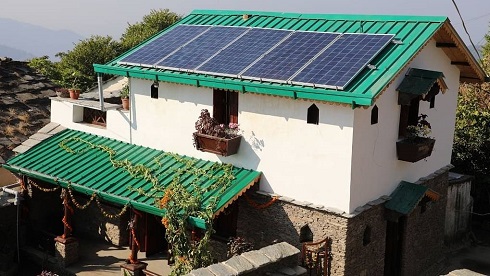
Guest house "Himalayan Hemp Eco Stays"
Construction was initiated in January
2020. During it, Indian architects had to train about a dozen local workers to
make and use various hemp building components, explaining to them the specifics
of using building materials from natural raw materials, which are not only that
hemp is an excellent building material, but also the fact that this kind of
building material has powerful antibacterial, antifungal, therapeutic
properties.
Another reason for using hemp building
materials was their natural origin, as well as their weather-resistant
properties. Those. the ability to withstand natural disasters - earthquakes,
flash floods and forest fires, which affect the area on which the building is
built. In addition, the idea of creating this kind of structure was also to
create an environmentally friendly building that could serve as a proof of
concept for the environmental benefits of using hemp.
“Until 2018, we worked with a well-known
architecture firm in Delhi. Then we moved here to research and promote building
components and technologies based on the properties of the hemp plant with the
help of our startup “Gohemp Agroventures”, which was initiated with three more
architects,” says Namrata Kandwal. “Instead of traditional concrete columns, we
used stones and clay to make foundation frames. While the toilets were built
from fire concrete, the bathrooms were separated by a monolithic wall made from
a mixture of fire and lime. In the finishing process, we mainly used hemp-based
plaster.”
The composition of hemp concrete blocks
allows sufficient time for the evacuation of residents living in such buildings
in case of fire. According to Namrata Kandwal, “During the ongoing experiments
with fire blocks, we realized that they are extremely fire resistant. We tried
to light them with a butane torch for 40 minutes, but it was impossible to do
so. In addition, during smoldering, the fire block does not emit smoke, the
inhalation of which is usually the cause of death.
Covering an area of 74 square meters,
Himalayan Hemp Eco Stays operates on a “zero energy” model with its 3-kilowatt
solar panels on the roof and a 4,000-liter underground rainwater reservoir,
according to Ms. Kandwal. . Purified water from the on-site treatment plant
also helps grow flowers and vegetables in the adjacent garden.
Since its opening by the former Chief
Minister of Uttarakhand on November 24, 2021, Himalayan Hemp Eco Stays has
already welcomed dozens of tourists.
Commentary of the specialists of the
Association “Ukrainian Industrial Hemp”
An article by Gaurav Dixit on
the benefits of hemp building materials was published by the Council for the
Advancement of Building Materials and Technologies (an autonomous body
established by the Government of India in 1990 to introduce new building
material technologies on a large scale). In particular, the published article
argued that hemp concrete is a lightweight building material that can
significantly reduce the cost and weight of the foundation of the entire
structure of the structure, thereby making the building itself
earthquake-resistant. Hemp building materials are an excellent moisture
regulator, which prevents the appearance of dampness and fungus during wall
decoration. Another feature of hemp building materials is their ability to
repel various insects and rodents, which is very important in a region where
traditional wooden structures suffer from termite attack. Insulating the roof
with hempcrete not