

The reasons why hemp companies specializing in working with medical hemp are unprofitable
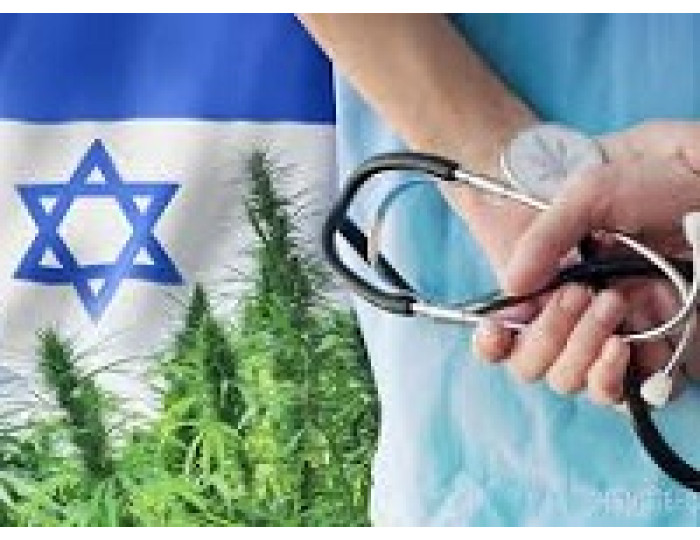
Raw materials cultivated in greenhouses are so expensive that without creating favorable conditions for the export of medical hemp, Israeli companies specializing in growing / processing / selling in this sector of modern hemp breeding cannot demonstrate profits to investors .
The pages of the profile electronic publication of Ukrainian hemp breeders have repeatedly described the problems of hemp breeders in Germany , Denmark , and other EU countries , who are implementing state policy aimed at meeting the needs of patients requiring medical hemp , at the initial stage by importing leaves and inflorescences with significant therapeutic potential , for reasons beyond their control, cannot establish the production of a national product that is in demand on the market of the above states . EditorsI turned to our colleagues, exploring this market within the framework of the information and analytical platform Hemp Consulting , with a request to evaluate the potential opportunities of the Ukrainian market of medical hemp in refraction to national companies planning to invest significant financial resources in its formation and development . Hemp Consulting specialists refused to describe the domestic market of Ukraine , referring to the clause of the already implemented agreement on trade secrets, which will be valid for a certain time. At the same time, we are offered an analysis of the ideal by the standards of the modern medical cannabis market , on which one can trace the same problems that Ukrainian companies face .
Hemp Consulting experts proposed to look at the essence of the issue from a completely different perspective in order to initially sweep away the tinsel of perfectly written business plans , "space projects", as well as using the emotions of potential investors to attract them to this sector of modern hemp breeding . We put aside the Wishlist and consider the life of companies specializing in closed production chains and already have a built-in sales system . As an object of “preparation” , we will take a deeper look at the situation in the ideal Israeli market for this research (the scientific and breeding base is one of the most advanced in the world , the absence of foreign companies supplying the market with imported raw materials , a significant percentage of the population using medical hemp as a therapeutic agent , support at all levels by the state apparatus for the development of the industry , etc.).
A look at the financial statements for 2019 of 11 Israeli companies specializing in the production of medical cannabis demonstrates a rather gloomy picture that is taking shape today in this sector of hemp breeding in the country .
Five of the above enterprises, all of which were engaged mainly in medical hemp , completed the year with zero income, as well as the loss of significant financial resources used for operating activities, a significant rate of use of financial resources for the functioning of non-core assets, often exceeding the amount of cash resources received from the state, sponsors or other sources of financial resources.
Two of the six remaining companies were able to earn ridiculous profit even by Ukrainian standards , but they are dim before the positioned billionth potential of this sector of modern hemp breeding . These companies, flaunting their presence in potentially new and profitable markets , were able to achieve a “positive result” and a market capitalization of millions of “American banknotes” without any income or even an existing production facility - in the wake of the market “warmed up by the advertising campaigns ” .
The remaining four Israeli public medical cannabis companies were able to show the following revenues in their 2019 reports:
- Seah Medical Group Ltd. - $ 8.2 million;
- Pharmocann Global Ltd. - $ 5.9 million;
- Panaxia Labs Israel Ltd. - $ 4.7 million;
- Canndoc Ltd. - $ 2.7 million
The four above-mentioned companies are “veterans” in this segment of modern hemp breeding in Israel , having been consistently earning in this market for the last ten years, and began to profit from the above activities even before the decision was made on the need to publicly place their securities on stock exchanges.
Most Israeli medical cannabis companies remain unprofitable, but the operating profit that they have reported to their investors throughout 2019 has been misleading because it contained data not related to the activities of hemp enterprises , such as registration fees on the stock exchange or biological assets, the value of which is not comparable with the finances necessary for the ongoing operations.
An analysis by the international accounting firm BDO shows that if non- hemp breeding reporting sections of approximately $ 99 million are excluded from the data provided, only two out of four “veteran” companies completed 2019 with a revenue of Seah Medical of about $ 2, 6 million, and Pharmocann Global Ltd. - about $ 1 million
In the first quarter of 2019, initial optimism in the industry remained, and stock prices rose significantly as a number of former Israeli officials took prominent posts in medical cannabis companies . The “young” companies were just starting their activities in the above period of time, and each corporation entering the medical hemp market received significant investments . In addition, the annual reports for 2018 were full of optimistic forecasts designed to encourage investors to invest significant amounts in the further development of the above-mentioned hemp breeding sector in Israel .
It was assumed that 2019 will be the year when the “bravura” forecasts come true. Despite the Wishlist, the year-end reports clearly indicate that this period can be called a turning point for the industry, which transferred investors from the “faith-in-promises regime” to “disappointment”.
For example, Together Pharma Ltd. chaired by former Israeli police chief Johanan Danino in March 2019 predicted that the year would end with an income of approximately $ 71.4 million, and as a result, the year ended with zero income on asset management of the company.
Univo Pharmaceuticals Ltd. was another company that falsely prophesied when it declared in its reports for 2018 a projected revenue of $ 1.9 million in 2019, quickly changing its “declarations of intent” in June to an “insignificant amount”. For the whole of 2019, Univo earned approximately $ 234,000, while spending about $ 310,000 on the production of its products . In fact, the company ended 2019 with a loss of $ 3.3 million due to shareholders. It should be noted that the management costs and total expenses of the company in 2019 amounted to about $ 1.4 million, while the company spent about $ 455,000 on research and development .
Veteran Companies also did not hesitate to give unrealizable promises to investors . For example, on April 23, 2019, Intercure announced that it had signed an agreement to create a megafarm in a kibbutz in southern Israel , which is scheduled to be launched by the end of the year, producing up to 100 tons of hemp per year. However, in its 2019 report, Intercure reduced the farm's production potential to 88 tons. As of the end of April 2020, the preliminary terms of the transaction were not implemented, i.e. declared capacity for growing plants with significant therapeutic potential have not been launched.
The blame for this situation cannot be blamed solely on hemp companies , as 2019 was an extremely turbulent year for the Israeli hemp industry . It all started with the fact that in January the government decided to allow the export of medical cannabis - a decision that has since been postponed to an unknown date due to bureaucratic barriers and scandals at the ministerial level. The year continued with a combined market capitalization of approximately $ 1.5 billion for Israeli cannabis companies , but ended in almost half of the above amount.
During 2019, the above-mentioned hemp companies also had to solve a lot of issues with the Israeli Securities Authority , which required various changes to the documents, as a result of which the companies reduced the cost of valuing their assets before the mergers and provided a phantasmagoric basis for their forecasts. In addition, at the end of 2019 the public agency securities Israel issued a warning about the speculative trade hemp shares saying that most traded companies have plans for the future and memoranda of understanding, and not the actual ongoing operations.
At the same time, the global trend that dampened the initial boom in the hemp industry , which began in Canada and spread to Israel , further lowered market valuations of companies in the industry .
Ironically, what stopped this fall is the coronavirus crisis. At the very beginning, the Israeli government called medical hemp companies a vital industry, which gave them an impetus for development . At the same time, the hemp business in Israel received a positive impetus, as local demand for medical hemp doubled over the past year: from 10 - 12 tons per year for 30,000 patients to 20 tons for 60,000 patients, and continues to grow gradually. As of the end of April 2020, the Israeli hemp industry has become one of the largest in the world: 65,000 patients consume 2 tons of product per month or 24 tons per year.
Nevertheless, investors questioned the existence of a significant number of Israeli hemp companies , which demonstrate a tremendous speed in spending financial resources than their income, as well as available cash reserves. This situation involves the receipt of additional investments or loans provided by shareholders, at a time when investors are already extremely wary of this sector of modern hemp breeding in Israel .
Doron Arami, head of the medical cannabis sector at BDO's Israeli subsidiary, said that the data of the company he works for demonstrates that their loss ratio will force most hemp companies to find new sources of financial resources by the end of 2020 in order to avoid an even greater shortage of funds. “The fact that medical cannabis export from Israel has not yet become a reality is detrimental to the work of these companies and their ability to attract money from new investors ,” he said. “After all, export is the only key to developing the Israeli hemp industry and providing companies, both“ young ”and“ veterans, ”with the vital space they need to sell their products . Now we are approaching the end of the first half of 2020, and the export of medical hemp from Israel has not yet been approved, not to mention the sale . The 2019 reports show that companies continue to inspire investors with confidence about the possibility of global exports as their main source of income. The 2020 reports are likely to show the best results for some of the above companies, but investors who have invested their resources in those companies that are left behind are likely to feel that the financial history of 2019 is repeating, and certainly not for the better. ”
Comment specialists Association " Ukrainian industrial hemp "
After reading a rather gloomy picture , described by the experts of the information-analytical company Hemp Consulting, the first emotion was skepticism about their conclusions , however, the documents provided indicate that the information is based on official reports of the above companies already verified by the Israeli tax authorities . Understanding the toughness and sometimes even cruelty of the Israeli state machine applicable to business entities that provide deliberately false information about their activities, the idea of "the art of Ukrainian accountants, taking the profitability of the enterprise to zero" in relation to Israeli structures involved in controlled substances disappears completely.
Once again, several years ago, the thesis was confirmed that the raw materials cultivated in greenhouses are so expensive that without creating favorable conditions for the export of medical hemp, Israeli companies specializing in growing / processing / selling in this sector of modern hemp breeding cannot demonstrate profit for investors .