

Systemic solutions to municipal problems in Italy, implemented on the basis of the properties of technical hemp
A project developed by Italian colleagues for the integrated use of hemp plants not only as an effective phytoremedic, but also for the most cost-effective use of the plant’s biological parameters as raw materials for the production of a number of popular groups of goods in the EU’s tough market , demonstrates the consistency of Italian hemp breeders in the implementation of the projects they create , as well as their interest government officials of the country in the use of plants for the benefit of the region.
Environmental pollution problems have recently become increasingly relevant for almost all regions of the planet . It is not surprising that in every country they are trying to find solutions to problematic issues related to the pollution of large territories in their own way, using the latest innovative technologies or applying natural methods - reducing emissions and introducing green technologies . The use of hemp plant with its unique properties, as well as opportunities in the fight for the environment becomes not only economically viable , but also to some extent an indispensable way of developmentcontaminated depressed agricultural regions. For example, technical hemp was included in the program for the reconstruction of the industrial region of Roccasecca, which is located in the province of Frosinone in Italy . Municipal officials are confident that the versatility of use , as well as the phytoremediation capabilities of the plant will not only help restore the region, which for many years has been actively contaminated with industrial waste, but also bring significant benefits to the city if the hemp is used effectively .
The main idea of the project is to turn the Roccasecca industrial zone into the first Italian outpost of the economic circuit of a real "green" project . The area, which has been polluted for decades, will be revived, introducing new economic approaches through the introduction of "green" technologies based on the properties of cannabis-free cannabis being introduced into production chains .
This program provides for the integrated use of hemp plants in various directions . Environmental experts say that drug-free hemp has exceptional phytoremediation properties that must be used to restore contaminated areas. According to the calculations of Italian specialists , one year of applying phytoremediation technology involving the use of industrial crops of technical hemp makes it possible, according to various sources, to clear the soil of heavy metals and toxins , and with the systematic use of industrial crops of a plant, the restoration of the land fund is accelerated several times and ultimately leads to the ecological situation of the area to normal natural condition. It is advisable to use the crop of malonarcotic hemp after such cultivation in technological processes associated with the production of bioplastics , cellulose , fabrics , the construction business or other production areas that do not include the use of grown hemp raw materials as a food product or daily items used by a person .
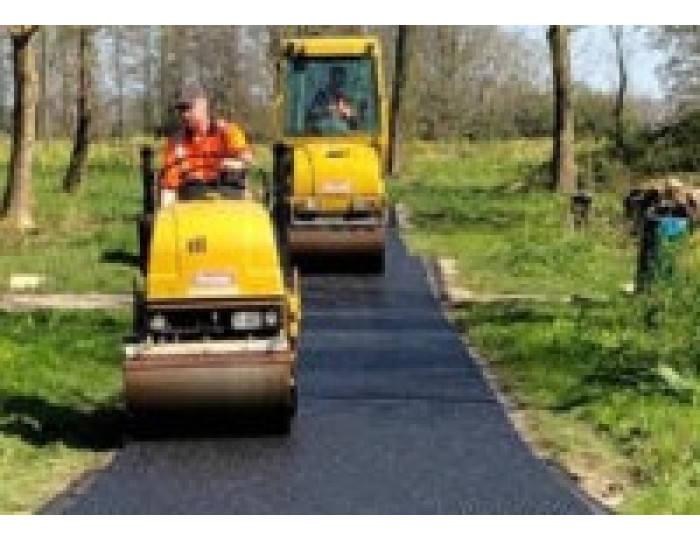
Do not forget that the introduction of these technologies is a reanimation of the economy of depressed regions and hundreds of new jobs that may appear when a new production is launched, for example, the production of ecological asphalt from hemp. The fact is that in the Rokkazekka region there is a network of asphalt plants that can be converted to environmentally friendly production of bioasphalt. Hemp can become a component in the production of ecological asphalt, primarily due to the presence of lignin in its composition. A consortium is working in Northern Europe (the Netherlands ), uniting researchers and industrialists , who, along with other plant materials, are testing hemp pulp , with which bitumen can be replaced in order to “bind” asphalt. Consortium experts are experimenting with new recipes on 8 already paved roads in the Netherlands , for example, a specially equipped road in the province of Zealand or a bicycle path at the University of Wageningen (Wageningen University ). During the experiments, experts from the construction market used three different hemp mixtures to create several types of bio-asphalt at once, one for each lane.
A separate area of the project is the production of biocomposite materials . A good solution to "plastic pollution" can be a hemp biocomposite , which they plan to replace many types of products made from fossil raw materials . It's no secret that cellophane or rayon is made from cellulose, therefore, in the production process , various components of hemp can be actively used as the main component for the production of cellophane foil or viscose fiber , which is what Italian manufacturers want to use to reduce environmental pollution in the future.
The ideologists of the project are trying to evaluate and take into account various options for using the properties of technical hemp to restore the region. The main message has not been changed - the integrated use of the entire territory, turning it into the first industrial center based on a green economy , where hemp is given a special place . In Italy it is hoping that the first kind "green" project will be successful and in his image and likeness will develop new integrated ecological projects in the framework of which will be based on the properties of industrial hemp for other industrial regions, which will develop modern environmentally friendly technologies , hemp and revive polluted industrial areas.
Commentary experts of the Association " Ukrainian industrial hemp "
A project developed by Italian colleagues for the integrated use of hemp plants not only as an effective phytoremedic, but also for the most cost-effective use of the plant’s biological parameters as raw materials for the production of a number of popular groups of goods in the EU’s tough market , demonstrates the consistency of Italian hemp breeders in the implementation of the projects they create , as well as their interest government officials of the country in the use of plants for the benefit of the region.