

Will hemp become the basis for sustainable development of the EU textile sector?
By producing hemp textiles / knitwear in the EU, a positive cascade effect can be directed down the value chain of the final product and stimulate the creation of new jobs, which is very attractive for both agricultural producers and entrepreneurs.
According to a number of analysts on the global hemp market, as the European Union's vision for the future development of the textile industry takes shape, hemp fiber is likely to play a decisive role in ensuring the sustainability of this sector of the economy. Considering the high economic and ecological value of growing a hemp plant, its fibrous part can become the basis for the use of these natural fibers, which will be used in the EU for the sustainable development of the textile / knitwear segment of the light industry of the member countries. To this end, EU state structures should facilitate the development of new technologies, as well as the promotion of innovative processes and products, while encouraging the readjustment of all stages of textile production in order to restore their “partial raw material sovereignty”.
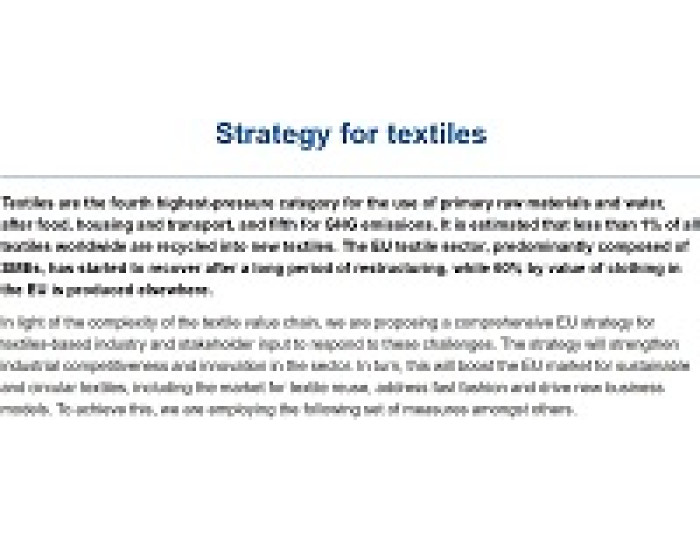
It should be borne in mind that the textile industry is considered one of the key sectors in the transition of a united Europe to a green and sustainable economy. For example, according to the EU, the fourth largest industrial consumer of primary raw materials and water - after food, housing and transport - this sector of the modern economy ranks fifth in terms of greenhouse gas emissions.
The strategy of the European Union for the production of textiles and knitwear is aimed at expanding the market for environmentally friendly industries that produce human-friendly fabrics, clothes, shoes, etc. The above Strategy seeks to develop environmental design measures, promote the use of secondary raw materials, and reduce the use of hazardous chemicals required for recycling, while providing businesses and private consumers with greater access to environmentally friendly products. Increasing the market share of natural fiber should be seen as a valuable alternative and necessary complement to expanded processing of “synthetic textiles”, as well as concrete action to reduce and / or balance carbon dioxide emissions.
Among other things, the widespread use of hemp fiber allows you to effectively work to reduce emissions of pollutants throughout the entire production chain - from agricultural activities to recycling, based on modern technologies for recycling hemp fiber. Considering the need to urgently address the problem of environmental pollution by microplastics, it is hemp raw materials that can become the foundation for the transition from the use of fossils to renewable natural sources of raw materials.
Commentary of experts of the Association "Ukrainian technical hemp"
According to the European Commission, Europe's textile sector, mainly composed of small and medium-sized enterprises, has begun to recover after a long period of restructuring. However, in value terms, 60% of the clothing sold in the EU is still produced outside Europe. By producing hemp textiles / knitwear in the EU, a positive cascade effect can be directed down the value chain of the final product and stimulate the creation of new jobs, which is very attractive for both agricultural producers and entrepreneurs. In turn, the intensively developing textile industry, which is based on hemp fiber, will give an impetus to the development of new varieties with an increased fiber content, which will lead to an increase in its quality, a decrease in costs and, accordingly, an increase in the competitiveness of goods produced from it in the EU.