

Ancient hemp building technologies with a modern twist
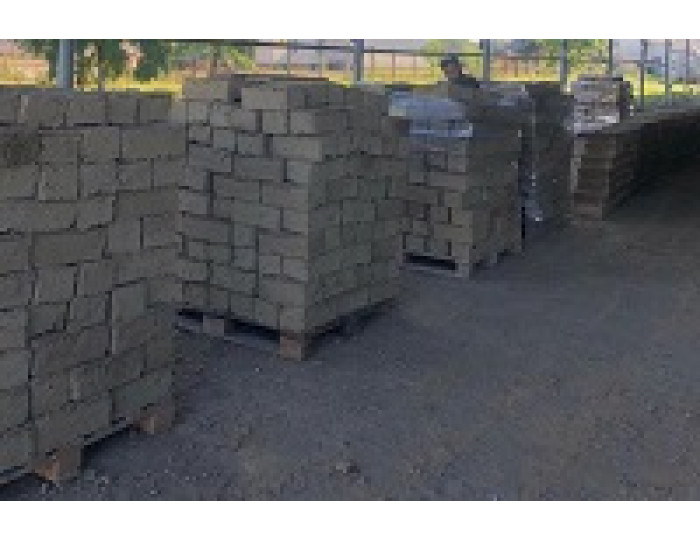
In Transcarpathia , a project is being implemented to build a building using hemp adobe (a mixture of clay and hemp fire). The structure built from this material will become one of the highlights of the tourism industry in the region, since it will not only house the Hemp Museum, but also production / retail space, which will traditionally be located next to the industrial planting of industrial hemp (a very popular place for photographing tourists).
Hemp growers with experience know that the use of the entire hemp plant in production requires a set of measures, including the development and implementation of fundamentally new and improvement of existing technological processes in order to significantly reduce the amount of production materials (the so-called waste - fires and scraps of fiber), as well as the development and implementation long-forgotten manufacturing techniques that have proven themselves hundreds of years ago.
Hemp can be used as a raw material for food, medical, textile, chemical, construction, and many other industries. For example, the use of woody and fibrous parts of a plant as a filler for the manufacture of building blocks is an interesting and promising direction for creating buildings that are unique in their characteristics. Such building material can be designed for the construction of load-bearing and partition walls of low-rise and multi-storey structures, for household and industrial purposes.
When using hemp as a filler for a building mixture, the consumer receives the following advantages over using traditional industrial materials:
- less weight and volume of required building materials;
- lower costs for the delivery and storage of materials;
- high environmental friendliness and biostability;
- high thermal insulation with less material;
- high seismic resistance and strength;
- simplification of finishing works and interior arrangement;
- reducing the complexity and duration of construction work;
- reduction of foundation costs, given the lower weight of the building;
- economic accessibility - reduction of construction costs and material costs;
- long-term operation of the building at various temperatures.
One of the American architects of the Rezolana Institute, Arnold Valdez, who received his master's degree in architecture from the University of New Mexico (UNM), undertook to take advantage of hemp materials using old traditional building technologies. After securing a Loeb Fellowship at the Graduate School of Design, Harvard University, Mr. Valdez returned to his home state to become a professor at UNM, teaching at the University the subject “Alternative Construction and the Study of Cultural Landscapes”. The enthusiast is delighted with the properties of hemp materials, which transform the finished building into the most self-sufficient complex, capable of self-regulation of the microclimate and the ability to withstand external negative factors.


In the course of the work, the builders, under the leadership of Mr. Valdez, use old technologies of combining clay, lime and hemp filler. At this stage of studying and improving the technology of building erection, researchers apply manual labor at all stages of production - from separating the fiber from the fire to the formation of finished hemp blocks.


Today Arnold Valdez is sure that working with such a natural material as hemp returns a person to his roots, brings him closer to nature. Mr. Valdez has devoted his life to studying how humans build and shape their habitats - studying patterns of ancient settlements in different parts of the world and reflecting on how they developed over time.
In the state of New Mexico, until recently, adobe (the oldest building material) played a large role in the cultural landscape of local residents. The experimental scientist is confident that having worked out the technology for the production of hemp buildings from clay and hemp, the specialists he has gathered will help a wider circle of people discover the availability and naturalness of hemp construction. In his work, the architect studied the centuries-old experience of working with this material in different parts of Europe - Spain, Italy, the Balkan countries, and the knowledge gained during the experiments is planned to be used in the future in industrial construction.
Commentary of experts of the Association "Ukrainian technical hemp"
Ukrainian traditions of using hemp materials in construction can not only be viewed in historical retrospect. In Transcarpathia , a project is being implemented to construct a building using hemp adobe (a mixture of clay and hemp fire). The structure built from this material will become one of the highlights of the tourism industry in the region, since it will not only house the Hemp Museum, but also production / retail space, which will traditionally be located next to the industrial planting of industrial hemp (a very popular place for photographing tourists). Within the framework of the Hemp University in 2019, a specialized round table was held , during which the features of various hemp construction technologies used in Ukraine were highlighted.