

The construction of bio-resources in France attracts not only professionals, but also politicians
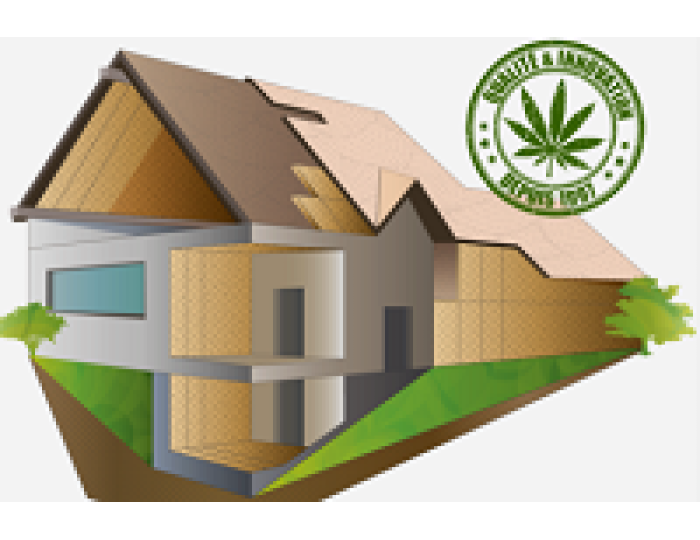
In the European Union over the past decades there has been a demand for technologies that demonstrate the feasibility of using plant raw materials (wood, hemp), as well as raw earth resources (clay, limestone) in the construction business. Historically, this is explained by the phenomenon of the return of balance to classical construction technologies. In particular, articles 14 and 144 of the French law 992 “On the transfer of energy for green growth” of August 17, 2015 introduced the concept of bioresources as applied to the construction sector.
The history of "filling" the market with building materials based on mineral resources
At the beginning of the 20th century, mineral materials and plant raw materials, without the use of thermal or chemical processing, accounted for almost two thirds of the building components. At the moment, their share is from 20 to 25% of the market of building materials.
In the 1950s and 70s. market trends have combined heavy technical equipment (machinery and mechanisms), which were considered most effective to meet the demand for housing in Europe, with manufacturers of cement, quarry aggregates (sand and clay mining), and metal structures in large construction holdings. Structurally, the construction sector during this period was built into the concept of development based on mineral resources, as opposed to the age-old practice that reigned until the middle of the last century. In particular, until the 30s of the twentieth century, wood and stone prevailed in the European construction industry. Straw, lime and hemp were used mostly in rural areas.
The gradual transition to building materials made from "processed" minerals implies a much higher energy consumption required for their production, which leads to their overestimated cost, which is much higher than unprocessed plant building materials with similar characteristics.
Data on the huge amount of fossil fuels involved in the production of "processed building materials", a significant amount of non-renewable raw materials that are used in modern building materials, the impossibility of their reuse, as well as a significant environmental load, which occurs after the end of life, are regularly raised by supporters "Biological construction" before the governments of individual EU countries.
Recently, supporters of the concept of "biological construction" crystallized the main arguments confirming the above theses:
- the global impact of construction on climate change (for example, the production of concrete implies huge greenhouse gas emissions into the atmosphere);
- environmental disasters in most areas where fossil raw materials are mined;
- the accumulation of a huge amount of construction waste and their non-renewable, non-reusable nature leads to the possibility of global environmental disasters.
In turn, the sector of the production of building materials from fossil raw materials realizing the seriousness of the growing problems does not stand still. For example, formulas have already been developed for the production of concrete with poor quality aggregates or the reuse of used crushed concrete. The cement industry is trying to introduce formulas that allow producing “cold” cements not in a furnace, but in a reactor, etc.
Towards a paradigm shift and the introduction of low carbon raw materials and products made from it in the construction industry
Regarding the changing approaches to the use of building materials, they are not only discussed by representatives of the “wooden” or “hemp” lobby of the construction market. Recently known French politicians have been actively raising this topic. For example, government officials insist that the construction of the Olympic Village is carried out from vegetable raw materials (wood and hemp). To this end, in October 2018, engineers and scientists gathered in the French capital to discuss the concept of building an Olympic village (XXXIII Summer Olympics will be held in Paris in 2024). The question of using buildings and structures made of wood, hemp fires and wood chips in preparation for the Olympic Games was discussed.
The challenges facing proponents of "biological construction"
Representatives of the "biological construction" are currently faced with unfulfilled problems associated with the need for standardization of new construction techniques, the inability to insure buildings made using "unconventional" building materials, a lack of understanding by modern engineers how to calculate the design of a building made from plant materials, etc. .d Despite this, there is a “re-discovery” of plant building materials, their integration into the traditional building industry. The concept of "biological construction" suggests that local plant materials that will be used during the construction of buildings will not only help solve a number of social problems in depressed regions, but also make opportunities to create new buildings much more accessible. It is already clear that local renewable plant materials used in the construction industry require much less energy / costs for their cultivation, the creation of buildings and structures, their exploitation, and the possibility of reuse.
Such tendencies are taken extremely seriously at the level of state and municipal officials in France. In 2017-18 specialists of the Paris region developed a regional strategy for the replacement of fossil building materials with raw materials based on bioproducts. At the Fibra Innovation conference held in Paris at the end of 2018, a representative of the region Ile-de-France announced the implementation of this concept by establishing mutually beneficial links between the agricultural, industrial and construction sector of the above-mentioned administrative-territorial unit of the country. As part of the implementation of this kind of concept, the world's first summit on the introduction of building technologies based on the concept of "biological construction" should take place on November 5-6.
Commentary of the Association "Ukrainian technical hemp"
In the European Union over the past decades there has been a demand for technologies that demonstrate the feasibility of using plant materials (wood, hemp, etc.), as well as raw earth resources (clay, limestone, etc.) in the construction business. Historically, this is explained by the phenomenon of the return of balance to classical construction technologies. In particular, articles 14 and 144 of the French law 992 “On the transfer of energy for green growth” of August 17, 2015 introduced the concept of bioresources as applied to the construction sector.
Actual problems of modern hemp construction will be discussed in the framework of the round table “Hemp raw materials - technologies of its use in construction, production of biocomposite materials and furniture”, which will be held in October-November 2019 as part of the next course of training for students of Hemp University.