

The therapeutic properties of flavonoids
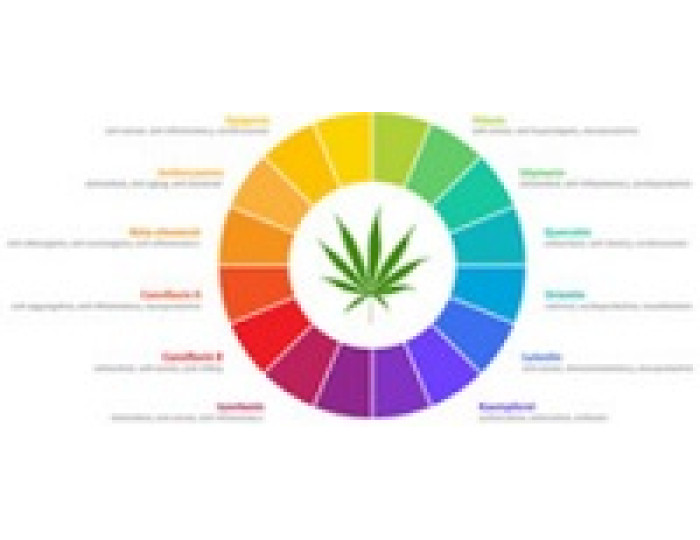
Flavonoids have great pharmacological activity as antioxidants, anti-inflammatory, anti-allergic, antidiarrheal, anti-cancer agents, as well as extremely effective antibiotics.
The hemp plant contains hundreds of therapeutically active elements, which by their synergistic effect (the so-called "ensemble" effect) are capable of not only healing the human body, but also treating a huge number of diseases known to science. On the pages of the specialized electronic edition of Ukrainian cannabis growers, the “ Therapeutic properties of terpenes”Is constantly focusing on the potential of drug-free cannabinoids. Given the interest of modern science in such therapeutically active elements of the hemp plant such as flavonoids, the editors tried to summarize the available information on this topic and provide them in a systematic form for possible use or creation of products or preparations (cosmetic, pharmacological), which will be based on the therapeutic properties. flavonoids.
Modern science claims that thanks to the flavonoids, the hemp plant has such a wide range of colors and flavors. Certain flavonoids (cannaflavins) are found only in hemp. Most of them have anti-inflammatory and antioxidant effects and can potentially be useful for the prevention of cancer or a number of other severe, including chronic diseases.
Flavonoids are polyphenolic secondary metabolites that have a ketone group and are usually yellow pigments from which their name is derived (from the Latin flavus, "yellow"). The entire spectrum of these therapeutically active elements can be divided into four main groups: flavonoids, isoflavonoids, neoflavonoids and anthocyanins.
Flavonoid biosynthesis follows the phenylpropane metabolic pathway, in which coumaril-SCoA is formed from the amino acid phenylalanine. The latter, in combination with malonyl-CoA, creates a group of substances called chalcones, which form the framework for the biosynthesis of all flavonoids and anthocyanins.
This reaction is catalyzed by the enzyme chalcone synthase, which belongs to the polyketide synthase (PKS) family. This PKS family also contains olivethol synthase, which is responsible for the synthesis of cannabinoids.
Flavonoids solve a wide range of problems in plants, mainly as yellow pigments in flower petals, effectively coping with the function of attracting pollinating insects or blue flowers (anthocyanins) by capturing certain wavelengths of light, allowing plants to recognize the photoperiod. Many of the flavonoids are also involved in filtering ultraviolet rays, protecting plants from their negative effects. At the cellular level, flavonoids act as regulators of the cell cycle. Certain flavonoids are synthesized in plant roots and play a crucial role in the fight against infections caused by pathogenic fungi.
Flavonoids have great pharmacological activity as antioxidants, anti-inflammatory, anti-allergic, antidiarrheal, anti-cancer agents, as well as extremely effective antibiotics. Several studies show that a diet rich in flavonoids can reduce the risk of cancer.
Various flavonoids can be found in cannabis such as cannflavin A, cannflavin B, cannflavin C, vitexin, isovitexin, apigenin, kaempferol, quercetin, luteolin, and orientin. Their distribution in the plant varies depending on the flavonoid in question, but no flavonoids have been found in the plant roots. In the leaves and flowers of the hemp plant, the total content of flavonoids can be up to 2.5% of dry weight, while in the seeds and roots it is almost zero. Most of these compounds are water soluble.
Medicinal properties of flavonoids
Cannflavins A, B and C
They have anti-inflammatory activity due to the fact that they have an inhibitory effect on the inflammatory pathway of prostaglandins. This mechanism of action is shared with the terpenes found in the hemp plant, providing a greater synergistic and anti-inflammatory effect compared to cannabinoids.
Vitexin and Izovitexin
Therapeutic use in gout by inhibiting thyroid peroxidase.
Kaempferol
It has antidepressant activity, and a diet rich in camferol can reduce the risk of cancer or cardiovascular diseases. It has an antidepressant effect, therefore the presence of kaempferol in the plant provides a synergistic effect with cannabinoids.
Apigenin
Reduces the side effects of cyclosporin A, an immunosuppressant that is prescribed during organ transplantation to prevent organ rejection by the body. It is one of the few substances that can stimulate the monoamine transporter by altering the levels of neurotransmitters. Acts on GABA receptors, providing anxiolytic and sedative effects. This mode of action is common to cannabinoids, so it may influence the possible synergy of anxiolytic and sedative effects that cannabis has.
Quercitin
Suppresses viral enzymes and can have antiviral effects, and also inhibits the production of prostaglandins, providing anti-inflammatory effects. A compound that synergizes with cannabinoids, increasing their anti-inflammatory effects. Separate studies provide evidence of the therapeutic utility of quercetin in fibromyalgia due to its potent anti-inflammatory properties. Cannabis has a therapeutic effect in cases of fibromyalgia, so the combination of quercetin and cannabinoids can be a source of synergy. Similarly, quercitin is an inhibitor of the enzyme monoamine oxidase, which is involved in the metabolism of neurotransmitters and drugs.
Luteonin and Orientin (Luteonin Glycoside)
They have pharmacological activity, demonstrated in preclinical studies, as antioxidants, anti-inflammatory drugs, antibiotics and therapeutically active substances that can fight cancer. Both compounds have a positive effect on synergism with cannabinoids.
Commentary of experts of the Association "Ukrainian technical hemp"
We constantly emphasize that the hemp plant contains several classes of therapeutically active substances, which in themselves have tremendous healing or healing properties. The synergistic effects provided by a combination of simultaneously acting cannabinoids, terpenes, flavonoids, terpenoids, finols, a number of other therapeutically active substances contained in a plant on a specific disease or a bunch of ailments suggests that the effect of the “ensemble” present in the flowers of a plant in most cases cannot be repeated either one of the extracts of individual plant elements. As much as possible and accessible, this topic will be revealed by the speakers of the round table " Problems and prospects of the use of therapeutically active elements of hemp as a basis for nutraceuticals, medicinal cosmetics, animal feed or other products with healing properties of a plant ", which will be held within the framework of the " Hemp University " ...