

USDA allocates $21 million to two cannabis research projects
In the most highly developed country in the world, conditions are being actively created for the industrial use of the fibrous part of the hemp plant, including for the manufacture of twisted, textile or knitwear.
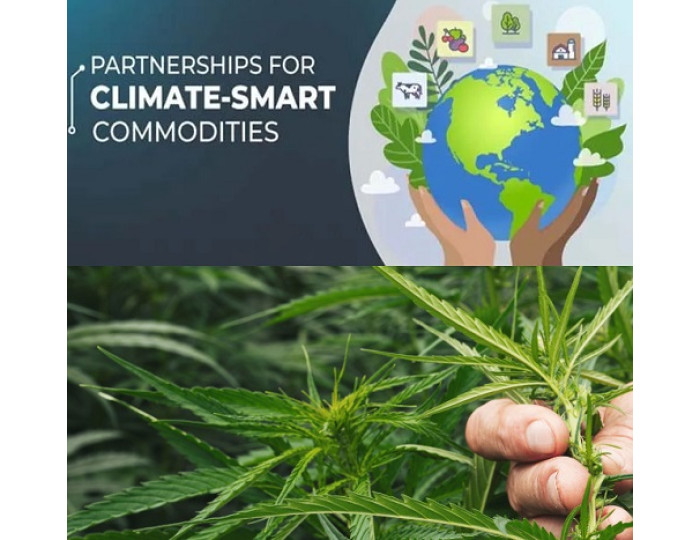
The United States Department of Agriculture (USDA) announced on September 14 that it will invest up to $2.8 billion in 70 selected projects under the Climate Smart Goods Program. Two of them are focused on research and development related to industrial hemp that can be used as a climate-smart commodity will be funded with a total of $ 21 million.
In particular, the USDA has allocated $15 million to support the Research Project “Technical Hemp for Fiber and Grain Production”, initiated by Iconoclast Industries, LLC. The project is expected to be implemented in Florida, New York, Tennessee, Virginia and Wisconsin and is designed to "expand climate-smart markets and address the lack of available data on sustainable hemp production practices by providing open information, education and monetization of climate-smart practitioners through a pilot project in the digital market.” In addition, the project creates conditions for interaction with underserved producers and providing them with financial support for the introduction of environmentally friendly production methods. The project implementation partners are the University of Florida, the University of Georgia, the companies INDHemp and 357 Hemp Logistics, as well as the Global Hemp Association.
The USDA has committed $5 million to the Lincoln University Expanding the Supply Chain of Industrial Hemp as a Carbon Negative Fuel and Fiber Feedstock Research Project. The project is expected to be implemented in Kansas, Missouri, Oklahoma and Texas and will "assist the commercialization and marketing of climate-smart cannabis varieties while promoting soil carbon sequestration and climate resilience." In addition, it will "ensure the effective valuation and monetization of environmental services, including the removal of carbon dioxide, through the introduction of new genetic and management methods to increase the sustainability of cannabis as an annual crop in the United States." Partners for this project include Oklahoma State University, Midwest Natural Fiber, New West Genetics, and the National Hemp Association and the Missouri Farmers Union.
Commentary of the specialists of the “Ukrainian Industrial Hemp Association”
The USDA announced in February 2022 that the government's capacity to "fund pilot projects that create market opportunities for U.S. agricultural and forestry products that use environmentally sound practices and include innovative, cost-effective ways to measure and verify the benefits of recycling greenhouse gases". As part of the implementation of this strategy, "Programs of climate-smart products" have been developed, in which two projects are included for implementation related to the use of the properties of the hemp plant for the utilization of carbon dioxide.
I would like to note a few points that eloquently indicate that the employees of the US Department of Agriculture not only create conditions for the development of modern hemp growing in the United States, but also finance projects aimed at the most efficient utilization of carbon dioxide, including using hemp fiber (as at least the names of both USDA-funded projects suggest this). Considering a number of materials indicating that the United States is actively conducting research aimed at studying industrial technologies for preparing hemp trusts (dew lobe or using reservoirs) for its processing, we can say that in the most highly developed country in the world, conditions are being actively created for use in industrial on the scale of the fibrous part of the hemp plant, including for the manufacture of twisted, textile or knitted products.
< Previous article Next article >