

The passion for cannabinoids provides an opportunity for biotech companies to bring to the market synthetic analogues of therapeutically active elements of cannabis
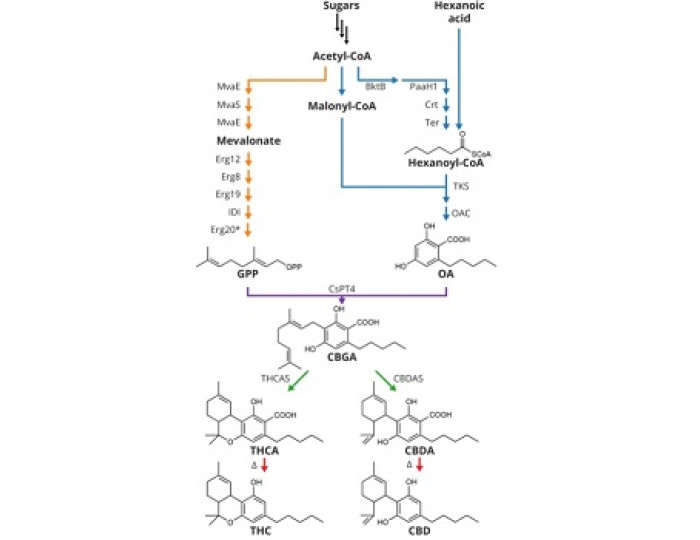
The question was raised about the unsafe use of synthetic cannabinoids (at least cardiotoxic and neurotoxic). Their action in the overwhelming majority in small quantities mimics the body's response to cannabinoids of plant origin, however, over time, side effects appear that significantly overlap the initial "therapeutic" effect.
As plant-based drug-free cannabinoids become more and more in demand by consumers, and as there are already sufficient numbers of natural drug-free cannabidiol (CBD) on the market, individual companies are stepping up efforts to produce lesser known therapeutically active plant elements - cannabigerol (CBG) and cannabinol (CBN) ... Another area of modern cannabis farming is the fastest possible use of marketing mechanisms aimed at meeting consumer demand by introducing synthetic cannabinoids to the market, which mimic the body's reactions to natural therapeutically active substances, or even incomprehensible components, which are only called cannabinoids. Dozens of biotechnological companies around the world have followed the above path, the management of which believes that it is much cheaper to sell synthetic analogs of natural compounds, making the most of the excitement around the therapeutic properties of hemp flowers and inflorescences for sales.
The explanations of technologists specializing in the production of synthetic cannabinoids are rather trivial - there is a race to improve production, which implies a significant reduction in costs. In addition, the therapeutic effects of cannabis leaves and flowers are not well understood, so their synthetic counterparts may find their niche in the market. In particular, according to one of the specialists of the companies involved in the production of synthetic cannabinoids, “We see a great interest of enterprises producing food, drinks, personal care products to produce new products that contain cannabinoids. They are not very versed in the properties of therapeutically active elements obtained from the plant and their synthetic analogs, but they want to purchase a semi-finished product at the lowest possible price. We just satisfy the demand, taking advantage of the prevailing market conditions favorable for us. "
In particular, the American company "Marlboro Altria Group Inc." acquired part of the Cronos Group (Canada) in December 2018, months after a Canadian legal psychoactive cannabis company struck a deal with Ginkgo Bioworks to create cannabinoids from yeast. More recently, the Cronos Group reported that the production of fermented / synthetic cannabinoids is on schedule and the end products with “alternative” therapeutically active elements of the hemp plant will be presented by September 2021. Cronos estimates that the target cost of producing fermented cannabigerol is less than $ 1,000 per kilogram or less than $ 1 per gram.

Technology of "production" of cannabinoids from brewer's yeast
Another synthetic cannabinoid company, Biomedican, claims it will be able to produce multiple varieties of fermented cannabinoids at a similar price, well below the current CBG wholesale price of $ 20 per gram. According to Biomedican Investment Director Dennis O'Neill “Growing, harvesting, extracting therapeutically active elements from hemp is extremely expensive. Our specialists make a similar product not only at an extremely low cost, but can also produce on an industrial scale various other therapeutically active elements of hemp. ”
Making artificial cannabinoids is a lot like making artificial meat. The process revolves around genetically engineered yeast, the same technology used to make heme, the ingredient that gives Impossible Foods artificial hamburgers their meaty quality.
It's not only cheaper to “construct” fermented cannabinoids than to extract them from plants. Representatives of companies specializing in this matter say that synthesis has other advantages. These include a cleaner pharmaceutical grade product, and the absence of legal problems associated with the lack of regulation in most cases of the mechanisms for the legal use of therapeutically active elements of the hemp plant itself.
Commentary of experts of the Association "Ukrainian technical hemp"
Sales of tinctures with CBN, CBG, THC-A or THC-V alone grew 11% in the third quarter of 2020 compared to the second, according to Headset, which tracks trends in cannabis therapeutics. At the moment, there are mainly natural cannabinoids on the market, however, given the success of companies bringing their synthetic analogues to the market, in the not too distant future unnatural cannabinoids will compete significantly with plant ones, primarily based on their cost.
Even at the round table “Cannabinoid therapy” held in November 2018 for the students of the “Hemp University”, the question was raised about the unsafe use of synthetic cannabinoids (at least cardiotoxic and neurotoxic). Their action in the overwhelming majority in small quantities mimics the body's response to cannabinoids of plant origin, however, over time, side effects appear that significantly overlap the initial "therapeutic" effect. As an example, human exposure to synthetic carotene was carried out, which for a short period of time actually kills the retina.