

In China, we discovered an ancient hemp blanket
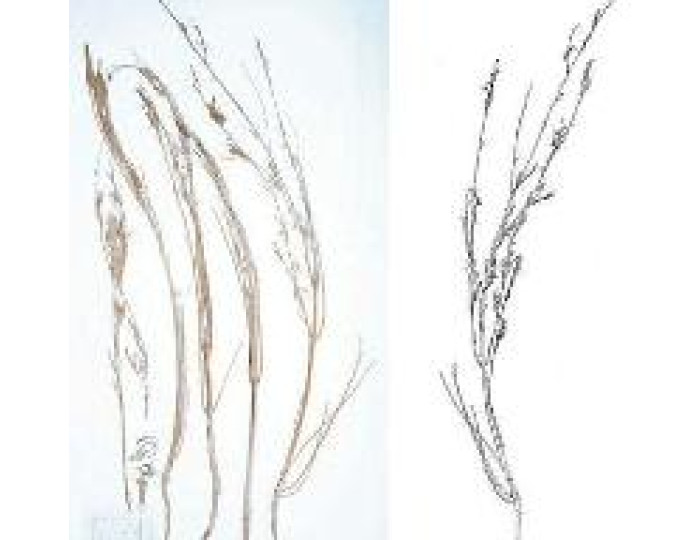
In ancient times, along with the use of cannabis seeds and inflorescences as food, analgesic or appetite stimulant, canabisa different parts involved in the ritual purposes.
The team of archaeologists discovered 13 cannabis plants in one of the prehistoric burial sites in northern China. The photos from the excavation site shows that the stems were left almost untouched. Located diagonally across the man's remains stalks matёrki, the maximum length of which reaches almost 89 cm, is remarkably well preserved, and the length of the shortest plants in the burial of ≈ 48,3 cm.
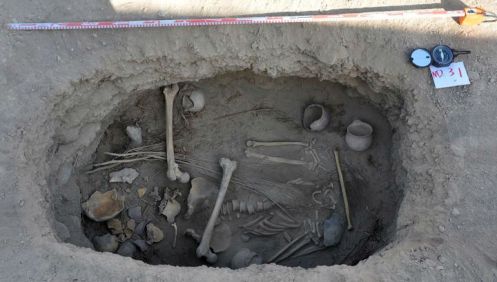
The report of the scientific journal Economic Botany, the leading archaeologist of the project Hunen Jiang (Hongen Jiang) provided a detailed description of the burial site, which mentioned that rested in the grave a man of thirty-five years, presumably Caucasian origin. Cannabis plants were located along the male breast buds close to the chin, and back toward the pelvis. Determine the age of the radiocarbon method of burial, archaeologists concluded that the tomb in the Turpan Basin at the time of the excavation can be from 2400 to 2800 years.
According to experts in ancient times along with the use of cannabis seeds and inflorescences as food, analgesic or appetite stimulant, canabisa different parts involved in the ritual purposes. If we consider the fact that the Turpan desert oasis was once one of the most important stops of the Silk Road, it becomes clear where burials inhabitants of Turfan and its environs could appear bags with seeds and buds - these products in ancient times were objects of trade and imported into the region from other places.
The archaeologists stress that there are many examples of finding the graves with the remains of hemp in the north-western parts of China, but this case is unique by the fact that the plant came to us in almost complete form. It mentions Mr. Jiang: "For the first time in history, archaeologists have discovered whole plant cannabis, posted on the remains like a shroud."
"Drawing a parallel with the previous findings, we see an unprecedented case of its kind. - They say the archaeologists who took part in the excavations of the burial. - Previously, we have found a hemp seed, or its blossoms, but never the whole plant itself. Based on this we can conclude that in this case the hemp stalks were disrupted by fresh before putting them into the grave of the deceased. " KP
Information taken from the site http://tku.org.ua