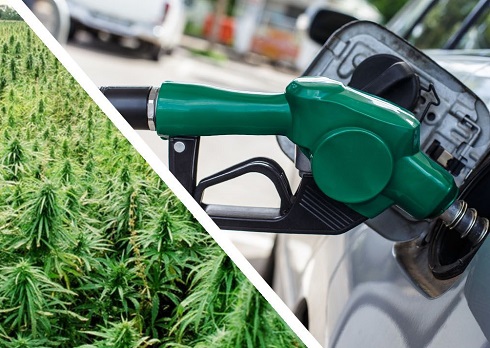
Using hemp to produce renewable natural gas

In the United States, a pilot project
based on the use of hemp raw materials as the basis for obtaining renewable
natural gas will soon appear.
On the pages of the specialized electronic edition of
national hemp growers, the question of “ How promising is the production of “green hydrogen”
from hemp ”
has been raised more than once, attention has been focused on the
characteristics of the plant, leading to the fact that “ Hemp is
put at the heart of US bioenergy security ”. Therefore, the information of our
American colleagues that technical hemp is an excellent raw material for
anaerobic digesters manufactured for the production of renewable natural gas,
we believe , will be of interest to our esteemed readers and listeners.
In the United States, industrial crops of industrial hemp
are considered not only from the point of view of using the plant as an energy
raw material, but also as a basis for the production of renewable raw materials
for obtaining environmentally friendly natural gas.
It must be borne in mind that, compared to other fossil
fuels, gas can be a renewable source of energy, since, through certain
technological processes, it allows the production of biomethane , biogas, green
hydrogen and synthetic methane: all renewable gases that contribute to the
reduction of greenhouse gas emissions, participating in the processes of decarbonization
and climate change mitigation.
Biogas, biomethane , green hydrogen, and synthetic methane
are various forms of renewable gas, defined as the product resulting from two
processes: anaerobic digestion and Power-to-Gas . In the case of anaerobic digestion,
organic waste, such as agricultural waste, decomposes and turns into biogas and
biomethane .
The US National Hemp Growers Cooperative has provided data
showing that industrial hemp not only competes with other energy crops, but
outperforms them on a cost-benefit basis. This means that the hemp plant
(having an output/input ratio of 4:6) requires fewer resources than traditional
biofuel crops such as corn (3:3) or canola oilseeds (2:2), but produces fuel
with more high energy content.
According to Nick Walters , managing partner of the
National Hemp Growers Cooperative, according to a study led by David Cornette
and Eberhard Luke, a plant can produce 208 million BTUs per acre (just under
half a hectare), which is the equivalent of 60,000 kilowatt-hours of
electricity, enough to run a dryer around the clock. within 27 months.
In addition to its energy potential, cultivated industrial
hemp can extract carbon from the atmosphere and store it in the soil, thereby
providing CO2 sequestration and climate change mitigation.
In addition, Mr. Walters argues that hemp is an extremely
interesting source of energy because it does not involve the problem of
"choosing" between food and fuel. Hemp seeds, which are valuable from
a nutritional point of view, are not used in the "digestion pot",
which may contain waste biomass.
Commentary of the specialists of the
Association “Ukrainian Industrial Hemp”
There is already a project in France to commercialize the energy properties of the hemp plant. Why urban transport in French cities will run on hemp . It seems that the policy pursued by the US Democratic Party to introduce energy-saving technologies or those based on the replacement of fossil raw materials with similar natural ones will lead to the fact that in the United States in the near future there will be a pilot project based on the use of hemp raw materials as the basis for obtaining renewable natural gas.