

Will hemp be a life saver for bees
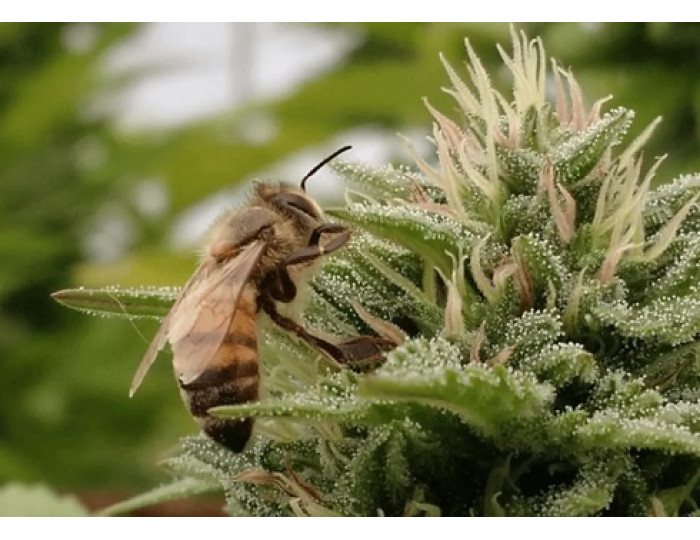
By adding industrial hemp to their crops, agricultural producers can significantly improve their other crop yields on the one hand, and be one step closer to ending the honey bee crisis on the other.
With a certain frequency, on the pages of the specialized electronic edition of national hemp growers, materials about “Bees and hemp” appear, or attention is focused on“or attention is focused on “Features of honey based on hemp pollen”. Given the fact that on the one hand, beekeeping is well developed on the territory of our country, and on the other hand, the hemp honey market is just being formed, the information provided by our overseas colleagues will be of interest to our esteemed readers and listeners.
American beekeeping has been in crisis since 2006, when US beekeepers first reported the sudden disappearance of entire colonies. The non-profit organization Bee Informed has released preliminary results from a new study showing that commercial beekeepers in the United States lost about 39% of their bee colonies between April 2021 and April 2022.
Bee colonies are being destroyed due to the combined effects of climate change, intensive farming, pesticide use, biodiversity loss, pollution, and more.
According to a number of global experts, the disappearance of bees and other pollinators could lead to malnutrition for millions of people around the world. “A lack of bees and other pollinators will wipe out coffee, apples, almonds, tomatoes and cocoa, just to name a few of the crops that depend on pollination. Agricultural officials in their countries must move towards more pollinator-friendly and sustainable food systems and policies,” says José Graziano da Silva, Director-General of the Food and Agriculture Organization of the United Nations.
Scientists at Colorado State University's Department of Soil and Plant Science may be doing just that with industrial crops of industrial hemp, providing bees with a sustainable diet throughout the growing season.
In a study published in the journal Biomass and Bioenergy, scientists found that cannabis can not only help prevent the death of bees, but also maintain species diversity.
Being wind-pollinated, hemp plants produce a large amount of pollen that is attractive to bees. Cannabis flowering in northern Colorado, where the experiments were carried out, occurs between late July and late September. This time period coincides with a shortage of pollinator-friendly crops in the region, making hemp flowers a potentially valuable source of pollen for foraging bees. Although hemp does not produce nectar, the pollen-rich nature of the flowers can make the plant an environmentally valuable crop. It requires far fewer resources to grow and uses virtually no pesticides. This makes the plant an ideal home for bees.
The research concludes that “By adding industrial hemp to their crops, agricultural growers can significantly improve their other crop yields on the one hand and be one step closer to ending the honey bee crisis on the other.”
< Previous article Next article >